|
This year's SER 2025
Annual Meeting was held in Boston, MA in mid-June. The awards
announced at that event recognize work done throughout the career
cycle of epidemiologists and several of this year's winners are names
which are familiar to regular readers of The Epidemiology Monitor over
the years. We offer our heartfelt congratulations to the winners and
our thanks to the nominators and the committees for the work involved
in making the final selections.
 |
Award: Distinguished Service to SAR
Winner: David Savitz, Brown University
David Savitz is Professor of Epidemiology in the
Brown University School of Public Health, with joint
appointments in Obstetrics and Gynecology and Pediatrics in the
Alpert Medical School. He is the former President of the Society
for Epidemiologic Research and the Society for Pediatric and
Perinatal Epidemiologic Research and North American Regional
Councilor for the International Epidemiological Association.
He arrived at Brown in 2010 from Mount Sinai School of Medicine
teaching and conducting research at the University of North
Carolina School of Public Health and at the Department of
Preventive Medicine and Biometrics at the University of Colorado
School of Medicine. Dr. Savitz received his undergraduate
training in Psychology at Brandeis University, a Master’s degree
in Preventive Medicine at Ohio State University in 1978, and the
PhD in Epidemiology from the University of Pittsburgh Graduate
School of Public Health in 1982.
|
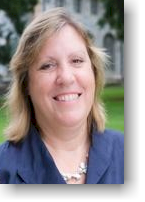 |
Award: Kenneth Rothman Career Accomplishment
Award
Winner: Carolyn Drews-Botsch, George Mason University
Drews-Botsch specializes in pediatric epidemiology, and the
factors, particularly in the perinatal period, that contribute
to the causation of certain diseases. She is an expert on
occlusion therapy (eye patching) in children
with unilateral congenital cataract and amblyopia, commonly
known as “lazy eye,” in children.
Over her time as an academic, Drews-Botsch has received the
National Research Service Award in Cancer Epidemiology from the
National Institutes of Health, has been elected to the American
Academic of Epidemiology, and, most recently, received a
Fulbright U.S. Scholar Award
to teach and research amblyopia in Ireland. She has published
over 175 peer-reviewed studies on topics related to pediatric
disease causation.
|
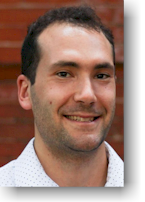 |
Award: Sherman James Diverse & Inclusive Award
Winner: Eric Rubenstein, Boston University
Eric Rubenstein, PhD, ScM is an Assistant
Professor of Epidemiology at the Boston University School of
Public Health. His work is focused on improving the lives of
individuals with intellectual and developmental disabilities (IDD),
including Down syndrome (DS) and autism spectrum disorder (ASD).
Epidemiology, the science of public health, is the crucial tool
that can help reach the ultimate goal of improving health and
well-being for the population with IDD. That work cannot be done
without input and collaboration from the IDD community, which
motivates and drives the work to be impactful and translatable.
|
 |
Award: Tom Koepsell & Noel Weiss Excellence in
Education Award
Winner: Daniel Westreich, UNC-Chapel Hill
Dr. Daniel Westreich is a professor of
epidemiology at the University of North Carolina at Chapel
Hill's Gillings School of Global Public Health. He received his
PhD in epidemiology from UNC-Chapel Hill in 2008.
Substantively, his research investigates the
intersection of HIV with reproductive health. This work has
elucidated relationships between pregnancy and response to
antiretroviral therapy, clarified methodology for studying the
potential impact of hormonal contraception on acquisition of
HIV. He is currently a PI of the STAR Cohort of reproductive-age
HIV-positive and -negative women, and a co-investigator on the
MACS-WIHS Combined Cohort Study. He also studies issues related
to COVID-19, and the intersection of HIV and chronic disease.
|
|
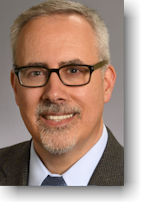 |
Award: Marshall Joffe Methods Award
Winner: Timothy Lash, Emory University
Timothy L. Lash, DSc, MPH, is Rollins Professor
and Chair of the Department of Epidemiology at the Rollins
School of Public Health. Dr. Lash serves as Associate Director
of Population Sciences at Winship Cancer Institute of Emory
University.
Dr. Lash
is a member of Winship's Cancer Prevention and Control Research
Program. He serves as chairperson of the Cancer, Heart and Sleep
Epidemiology B Study Section, Center for Scientific Review at
the National Institutes of Health (NIH). He also holds
memberships with the American Association of Cancer Research and
the Society for Epidemiologic Research.
|
|
|
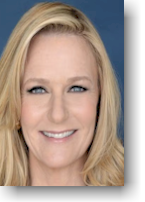
Award: Roger Detels Infectious Disease Award
Winner: Anne Rimoin, University of California, Los Angeles
Dr. Anne W. Rimoin is Professor of Epidemiology
at the UCLA Fielding School of Public Health and holds the
Gordon–Levin Endowed Chair in Infectious Diseases and Public
Health. She directs the UCLA Center for Global and Immigrant
Health and is internationally recognized for her work on
emerging infectious diseases, global health security, and One
Health approaches to pandemic preparedness. Since 2002, Dr.
Rimoin has worked in close partnership with collaborators in the
Democratic Republic of Congo (DRC), where she established the
UCLA–DRC Health Research and Training Program alongside the
Kinshasa School of Public Health and the National Institute of
Biomedical Research.
|
|
 |
Award: Carol Hogue Mid-Career Award
Winner: David Rehkopf, Stanford University
David Rehkopf a social epidemiologist and serves
as an Associate Professor in the Department of Epidemiology and
Population Health and in the Department of Medicine in the
Division of Primary Care and Population Health. His research is
focused on understanding the health implications of the myriad
decisions that are made by corporations and governments every
day - decisions that profoundly shape the social and economic
worlds in which we live and work. While these changes are often
invisible to us on a daily basis, these seemingly minor actions
and decisions form structural nudges that can create better or
worse health at a population level. In all of his work, he has a
focus on the implications of these exposures for health
inequalities.
|
|
|
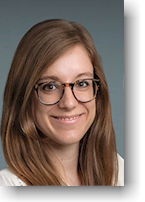
Award: Brian MacMahon Early Career Award
Winner: Ellen Caniglia, Univ of Pennsylvania Perelman School of
Medicine
Dr. Caniglia is a perinatal and HIV
epidemiologist who works to improve health outcomes among
pregnant people and their children, and among people with HIV.
Her work utilizes methods for causal inference to identify
optimal treatment and prevention strategies in these
populations. She received a K01 award from the Eunice Kennedy
Shriver National Institute of Child Health and Human Development
(NICHD) to estimate the effects of micronutrient supplementation
strategies during pregnancy on adverse birth outcomes, to
identify barriers to supplementation, and to pilot an
intervention to provide supplementation at antenatal clinics in
Botswana. Caniglia collaborates broadly on projects related to
causal inference; HIV; and reproductive, perinatal, and
pediatric epidemiology. She is passionate about teaching the
next generation of epidemiologists.
|
|