HOME    ABOUT    NEWS    JOB BANK     EVENTS    CONTACT


Resources
UCLA Updates Its John Snow Website
 

Author: Ralph R. Frerichs, DVM, DrPH
Professor Emeritus, UCLA (Epidemiology)

The new John Snow website has arrived, sponsored by the UCLA Fielding School of Public Health and the UCLA Department of Epidemiology. The site name remains the same as in the past, but has been completely transformed to a contemporary setting with historical maps and images, focusing on places and times of John Snow, bringing life to a remarkable legendary figure.

Every field benefits from a hero who captures its aspirations and successes. In epidemiology, that hero is British physician Dr. John Snow (1813 -1858). During 1999-2000, while active in the UCLA Department of Epidemiology as Professor and Chair, I created what turned out to be one of the first online extensive resources dedicated to John Snow's work. It provided a central access to historical London maps and other materials related to his cholera investigations, previously more difficult to locate, and introduced the field of epidemiology to a broader audience.

The site remained active for two decades until 2019 when the web adopted new safety standards, addressing risks of computer viruses and the like. By then I had been retired for some while and was engaged in different activities. Others, however, paid attention to the dangers, and were no longer willing to risk clicking on an “unsecured” website.

In late 2024, the Chair of Epidemiology urged me to consider upgrading the John Snow site, including finding new material (a joy), learning new programming skills (not so joyful), satisfying UCLA disability requirements, and making sure the material appears on phones, pads and desktops. It was a hard slog and a year later, the new site emerged in October 2025, on the web once more at: https://epi-snow.ph.ucla.edu/.

What makes the new John Snow site special? Rather than offering just snippets on Snow’s major accomplishments, the site with its many colorful maps and images is more comprehensive, presenting five streams of John Snow’s life, now deemed the “father of modern epidemiology.” The site’s intention is to remind epidemiologists of their glorious history, and to attract young people to the wonders of epidemiology, considering it as a possible career choice.

The opening three paragraphs of the website best capture what follows.


British physician John Snow (1813-1858) is considered by many as the "father of modern epidemiology" for his seminal investigations of cholera in London, long before the bacterial agent and its deadly toxin were widely known. During the mid-1800s, the prevailing notion of the cause of cholera was being overcome by "bad air” (the miasma theory). Snow's epidemiological investigations, however, pointed to the disease being transmitted through contaminated water, likely by a biological agent of some ill-defined form (the germ theory), a conclusion that was widely debated until well after Snow's death at age 45 in 1858. Unbeknownst to Snow, the Italian microbiologist Filippo Pacini (1812-1883) had already seen the causative agent of cholera in 1854 while Snow was conducting his famous field studies. The bacterium Vibrio cholerae was finally cultured and identified in January 1884 with great publicity by German physician and microbiologist Robert Koch who wrote widely of its distinctive comma shape, perhaps not aware of Pacini's earlier observations. While Koch hypothesized that the organism produced a toxin, another 75 years would pass before the cholera toxin and the exact method of pathogen transmission was clearly identified by Indian medical scientist Sambhu Nath De in 1959, a century after Snow's death.

One of Snow’s cholera investigations was in a neighborhood near his London home, termed the "Broad Street Pump outbreak," which led to authorities removing the handle from the pump, a lasting symbol of public health action to save lives in the face of uncertainty. Snow’s second major investigation was south of London’s River Thames, deemed the "Grand Experiment,” comparing cholera deaths in two sets of households, one receiving sewage-contaminated water from the nearby River Thames and the other receiving relatively clean water from an upriver location.

Innovative and personable, Snow was able with colleagues to support his epidemiological research, long before government funds or charitable organizations were there to assist. Instead he relied on: 1) data compiled from public listings provided by the Registrar General's Office, 2) amiable persuasion to assist with field work and 3) the earnings of his clinical practice as anesthesiologist. Snow's prominence as a master of anesthesia soared with his inventions, presentations and publications and when administering chloroform during the birth of two of Queen Victoria’s children. With his life of remarkable achievements in an era of biologic and anesthetic mystery, he remains a pioneering figure in the history of both epidemiology and anesthesiology.


The website is organized into the five streams, or chapters if thinking of books, each with between 5 and 12 sub categories.

Stream 1 - Introduction

a.      Encyclopedia Entry and “Greatest Doctor”

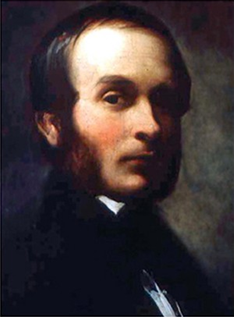
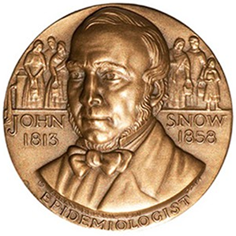
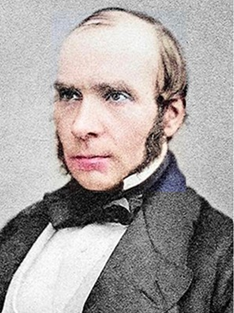
b.      Images and Medal of Snow

c.      Father of Modern Epidemiology

d.      John Snow’s publications (126 between ages 25 and 45 [year of death])

e.      Memoir of his friend Benjamin Ward Richardson


Stream 2 - Broad Street Pump Outbreak

a.        Overview and Part 2 of Snow's 1855 Book, Map 1

b.      Photo Tour of Snow's London Neighborhood (includes Snow’s 3 homes)

c.      Photo Tour of Broad Street Pump Outbreak (includes Broad Street pub)
 

d.      Investigation of Broad Street Pump Outbreak

e.      Handle Removal, Index Case and Rev Whitehead

f.        Map, Myth and Error Making in BS Pump Outbreak


Stream 3 - "The Grand Experiment

a.        Introduction and Part 3 Snow's Book, Map 2

b.        Photo Tour of History of London's Water Supply (37 slides)*

*Water played a central role in John Snow's legacy, as he explained the spread of deadly cholera. Author and community lecturer Adrian Prockter (2007) presents the history of water acquisition in London, and sets the stage for the dramatic events of the mid-1800s that terrified this great city. Included is mention of John Snow's grand experiment in 1854.

c.          Photo Tour of Tidal River Thames (36 slides)*

*The River Thames had much to do with the epidemic spread of cholera in nineteenth century London. When the water companies were told by Parliament in 1852 to move their intakes up river to above Teddington Lock, it served as a major step in improving the drinking water. One company (Lambeth) complied quickly, and the other (Southwark and Vauxhall) waited until the last minute, right before the August, 1855 deadline. When cholera reappeared in London during the mid-1800s, the delayed move of the Southwark and Vauxhall company provided the basis for Snow's grand experiment. Adrian Prockter offers a photo tour of these historical times.

d.        “Grand Experiment” of 1854 (extensive details of the “Grand Experiment”)

e.        Photo Tour of Southwark and Vauxhall Water Company (40 slides)*

*The Southwark and Vauxhall Water Company (also known as the Southwark and Vauxhall Waterworks) was created in 1845 by merger of existing waterworks. The water intake from the River Thames of the merged company remained in the heart of London, supplying contaminated water which eventually included waste of cholera patients, as investigated by John Snow in his "Grand Experiment." Water contamination remained, until Southwark and Vauxhall Company moved its intake upriver in 1855 to Hampton. Author and community lecturer Adrian Prockter (2007) presents historic images and text of the formation of Southwark and Vauxhall Company, bringing visual life to an important event in the history of London.

f.        Photo Tour of Lambeth Water Company pre-1852 (34 slides)*

*In his "Grand Experiment," John Snow demonstrated that persons drinking contaminated River Thames water were more likely to experience cholera than those drinking clean upriver water.

After 1852, the Lambeth Water Company became the source of clean water with its upriver move, leaving behind the Southwark and Vauxhall Water Company to provide contaminated water. Author and community lecturer Adrian Prockter (007) presents historic text and images of the formation and existence of the Lambeth Water Company (also known as Lambeth Waterworks) prior to the company moving upstream.

g.        Photo Tour of Lambeth Water Company post-1852 (34 slides)*


*“
London was without cholera from the latter part of 1849 to August 1853. During this interval an important change had taken place in the water supply of several of the south districts of London. The Lambeth Company removed their water works, in 1852, from opposite Hungerford Market to up-riverThames Ditton; thus obtaining a supply of water quite free from the sewage of London.” - Snow, John. On the Mode of Communication of Cholera, 1855.

The photo journey of the history of Lambeth Water Company continues, following the 1852 upriver move, with text and slides provided by author and community lecturer Adrian Prockter (2007).


Stream 4 - John Snow’s
Life

a.        John Snow’s Early Years, Part 1

b.        John Snow’s Early Years, Part 2

c.        John Snow's Professional Years

d.        Anesthesia for Queen Victoria

e.        John Snow's Death

f.          Remembrances and New The Lancet Obituary


Stream 5 - Additional Items

a.        Overview of Snow's Significance

b.        Part 1 of Snow's 1855 Book

c.        Part 4 of Snow's 1855 book

d.        Other Cholera Outbreaks (1831-32, 1848-49, 1853-54)

e.        Writings on Snow for Young People

f.          Cholera Theories and Conflicts (includes miasma and germ theory)

g.        First Discoverer of Vibrio Cholerae ( Italian microscopist Filippo Pacini)

h.        William Farr - Campaigning Statistician (first a critic and then an ally)

i.          Honoring John Snow in England and the USA (many sites and organizations)

j.          Conversation with "The Ghost Map" Author (Frerichs and Seven Johnson)

k.        The "Modern John Snow" - R. Piarroux, MD, PhD

l.          Current Cholera Information and Implications of Snow


In summary, when viewing the John Snow site, the character and intelligence of the man should become readily apparent. This point was best made by Johns Hopkins Professor Wade Hampton Frost M.D., himself an impressive epidemiologist, when he wrote in 1936 in an introduction to a re-issuance of John Snow’s book, On the Mode of Communication of Cholera (1855): “Of Snow's character, the circumstances of his life, the range of his interests, and the position which he held in his profession, an illuminating account is given in the memoir by Richardson, his warm friend and admirer (Dr. Benjamin Ward Richardson, 1828-1896, presented in Stream 1e). It gives the picture of a man singularly endowed with the ability to think in straight lines and the courage to follow his own thought. In medicine these abilities placed him in the front ranks of his day; in epidemiology they carried him a generation beyond it” (and now even further). 


HOME    ABOUT    NEWS    JOB BANK     EVENTS    CONTACT