|
|
||||||||
|
|
||||||||
|
Profiles in Public Health |
||||||||
|
Authors:
Wendy Reasenberg (author)
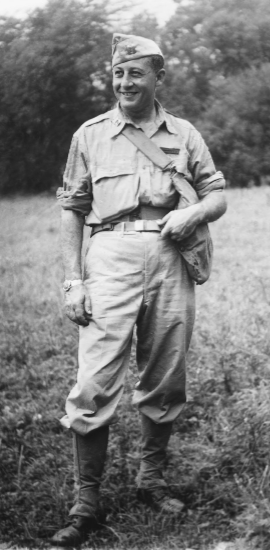
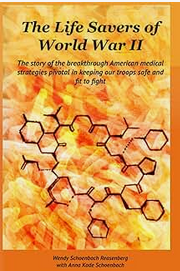
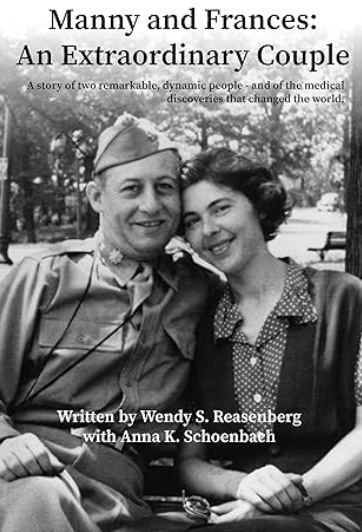
IntroductionMuch has been written about World War II, but very important events that were pivotal in the victory still remain largely unknown more than 80 years later. When one thinks of the significant contributions to the war effort by doctors, scientists, and engineers, what immediately comes to everyone’s mind is the great advances in military technology. That is: radar, sonar, advances in aviation, and the Manhattan Project that resulted in the atomic bomb. Rarely mentioned are the vital medical accomplishments of the Army Epidemiological Board (known today as the Defense Health Agency). Their dedicated and brilliant work in controlling infectious diseases among our troops was a major contribution to winning the war. “Wars are lost by generals and won by epidemics,” wrote the pre-eminent bacteriologist and world class expert on infectious diseases, Dr. Hans Zinsser. Dr. Zinsser demonstrated that the true reason for the success of any military campaign was not weaponry or military strategy. Simply put, sick soldiers cannot fight and often die from diseases like dysentery, cholera, typhus, pneumonia, diphtheria, and countless others. First published in 1935 for a general audience, Rats, Lice and History[1] made ground-breaking revelations because it discussed famous historical conflicts from a medical rather than the usual military perspective. In numerous interesting examples in his book, Zinsser made it clear to all that “the tiny, microscopic, but very numerous, creatures who make their homes on the louse, the flea and the mosquito … have decided more military campaigns than Caesar, Hannibal, Napoleon, and all the inspectors general of history.” 2 Dr. Zinsser wrote the book for his personal satisfaction; however, because the language was non-medical and highly accessible to people who weren’t in the medical or military fields, his book was read by many ordinary people. Compared to today, medicine in 1940 was in a fairly primitive state. After World War I, it was known that diseases were spread by various microorganisms. The importance of cleanliness was well understood in disease prevention. Draining of wounds and new techniques in splinting helped patient recovery and reduced the risk of infection. Surface wounds could be treated with antiseptics to prevent infection. However, if the wound was deeper and became infected, there was little that doctors could do.3 In the early 20th century, medical research was highly focused on how to deal with epidemics. Doctors knew that infectious disease came from microorganisms and that attention to having clean water for the troops, running a clean camp kitchen, providing adequate sanitary facilities for human waste, and individual personal hygiene were essential to prevent typhoid, dysentery, salmonella, cholera, and typhus. However, they had few tools to fight other dangerous infectious diseases. The six years from 1939 to 1945 were before the development of antibiotics. Infectious diseases such as scarlet fever, tuberculosis, whooping cough, diphtheria, typhus, and meningitis were commonplace, serious, and deadly. They were highly contagious and spread like wildfire in the military camps. Because they spread so rapidly, gaining control over infectious diseases has historically been the most important major medical issue. The treatments that we take for granted today were unavailable. Isolation was one of the only methods available to prevent the spread of these infectious diseases to the wider population. However, to be effective, the dynamics of how a disease started and spread, the key factors needed for isolation to be effective, were usually unknown. If a person got sick with an infectious disease, the chances were very high that the patient would die, especially if the patient was a young child. Losing a child to scarlet fever, whooping cough, or diphtheria was not uncommon for families both rich and poor. Penicillin was still in development as researchers struggled to neutralize toxic side effects and later to figure out how to manufacture it in quantity. By 1940, the medical situation in the military was becoming urgent. There were infectious diseases such as diphtheria, meningitis, pneumonia, and influenza that could not be prevented by basic sanitary practices. Even before the US joined the war, England and its allies were already dealing with these diseases at epidemic levels in some places. As the Assistant Secretary of the Navy in World War I, President Franklin D. Roosevelt had been privy to the knowledge that, in war, typically more soldiers die of disease and infection than from the actual wounds sustained in battle. Roosevelt saw the possibility of war on the horizon when Germany invaded Poland on September 1, 1939. In 1940 and 1941, he instigated a lot of concurrent activity at the highest levels of the US government and the military in Washington, D.C. to utilize the best minds and resources available for the country’s defense. Roosevelt focused on the problem of military medicine and infectious diseases, establishing the Health and Medical Committee by order of the Council of National Defense on September 19, 1940.4 On June 27, 1940, President Franklin Roosevelt created the National Defense Research Committee (NDRC) whose mission was to connect scientific research with military needs at the highest levels.5 Military medicine includes medical research on all problems of military interest, the development of solutions, and their deployment to the troops. This mission includes the prevention and treatment of infectious diseases. On January 11, 1941, based on the recommendation of the Surgeon General of the U.S. Army, the Department of War created a “Board for the Investigation and Control of Influenza and Other Epidemic Diseases in the Army.”6 This group became known as the Army Epidemiological Board (AEB) with the mission to protect and maintain the health of our troops and authorized studies to prevent deadly epidemic outbreaks. There were many committees including the Commission on Meningococcal Meningitis.7 The doctors in the military were concerned that as more men were mobilized, the situation would become worse.8 Furthermore, outbreaks at stateside military camps would also have the potential to easily spread to the adjacent civilian populations. The doctors were well aware that millions had died from epidemics of influenza and pneumonia during World War I.9 As the war escalated in the Atlantic, German submarines began sinking any ship, including American merchant ships, crossing the Atlantic. Roosevelt and his advisors saw the need for a more centralized authority for military medicine with a more proactive agenda to develop practical solutions, not just research. A new Office of Science for Research and Development (OSRD) was established by executive order on June 28, 1941. Its mission was to protect the health of the troops, to develop products, procedures, and other strategies to prevent epidemics or cure disease. The two agencies were merged, working together.10 The same executive order also established a Committee on Medical Research (CMR) within OSRD, gave it authority over the field of military medicine, and took over the work of the Health and Medical Committee.11 The Army Epidemiological Board now operated under this overarching umbrella. The Army Epidemiological Board took on these challenges by organizing a series of commissions to get the best personnel on the assigned jobs. For a maximum utilization of resources, they planned to work with civilian as well as military facilities. Each commission was tasked to focus on a specific disease or medical problem and would consist of both military and civilian experts such as epidemiologists, physicians, bacteriologists, chemists, pathologists, etc. The Army Epidemiology Board was expected “to make arrangements to utilize every scientific facility available in this country in a concerted effort to control these diseases and to reduce their mortality to a minimum.”12 Life Savers of World War II demonstrates the important work of the Army Epidemiological Board as seen through the efforts of one man, my father, Dr. Emanuel B. Schoenbach. His medical adventures are recreated using his private materials in addition to his published papers. Dr. Schoenbach is also an example of the difficult situation all young doctors faced in the World War II era. He graduated from Harvard Medical School in 1937, a protege of Dr. Zinsser. He interned at Mount Sinai Hospital in New York City. In 1940, inspired by Dr. Zinsser’s enthusiasm and insights into the research, treatment, and prevention of infectious diseases, Dr. Schoenbach returned to Harvard to work with Dr. Zinsser on his research in infectious diseases. Drs. Schoenbach and Zinsser were working together when Dr. Zinsser died in September 1940 of cancer. Dr. Schoenbach was bereft as they had become very close. He remained at Harvard Medical School as an instructor in bacteriology and immunology. A few months later, he was asked to volunteer with other members of the Harvard faculty to assist with a critical public health emergency in Halifax, Canada. That important experience made him a person of interest for the Army Epidemiological Board. He was recommended to the AEB by Dr. James Conant who was then the president of Harvard University and one of the original eight members of the National Defense Research Committee (NDRC) . Note that World War II began in Europe in September 1939 following Germany’s invasion of Poland. Based on treaty commitments, England immediately declared war on Germany. When England declared war, Canada, as a member of the British Commonwealth, also joined the war. The United States entered World War II after the Japanese bombed Pearl Harbor on December 7, 1941. When the attack on Pearl Harbor occurred, Dr. Schoenbach had just returned to New York City to start a residency in infectious diseases at Mount Sinai. As with all young male doctors of that era, he was required, as well as motivated, to become involved with the war effort. His term on the AEB as a civilian was renewed and when he joined the military, he became a military member of the AEB. His first rank was Captain, then Major, and later, Lieutenant Colonel. In total, Dr. Schoenbach served on the AEB as a consultant to the Secretary of War, both as a civilian and in the military, from 1941-1948. From 1943-1946, he was the Field Director of the Board’s Commission on Meningococcal Meningitis. Dr. Schoenbach’s medical work is representative of the work of the many dedicated groups of scientists and medical who labored behind the scenes as part of the Army Epidemiological Board. The narrative of his work provides a window into that momentous effort to ensure that our troops and our population were kept as healthy as possible. ■
FOOTNOTES 2 Zinsser, H., 1935, pg 152, 153 3 Bell, Louise. “Medical Developments in World War 1.” British Library, 7 November 2018, https://www.bl.uk/world-war-one/articles/medical-developments-in-world-war-one , written 7 Nov. 2018, Accessed 11 28 2022 4 Stewart, Irving, Organizing Scientific Research for War, Administrative History of the Office of Scientific Research and Development. Little, Brown and Company, 1948, pages 35-39, archive.org (pg 37) 5 Stewart, I. 1948 pg 7 6 Woodward, 1990, pg 15 7 Woodward, 1990, pg 26 8 Woodward, 1990, pg 19
9
Woodward,
1990, pg 19 11 Stewart, I. 1948, pg 35-37 12 Woodward, 1990, pg 19
|
||||||||
|
|
||||||||