| |
|
Epidemiology News
Briefs |
 |
| |
|
|
| |
Current Issue:
June 28, 2017 Briefs |
| |
|
|
| |
 |
CDC
Zika Update |
| |
|
Flu Kills More Than 100 Children And
Adolescents Each Year |
| |
|
Eleven Blue Men Revisited |
| |
|
|
|
|
|
|
|
|
|
|
Archives |
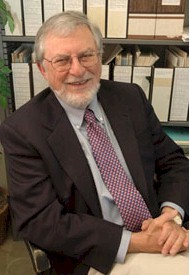 |
Social Epidemiologist
Interviewed in Epidemiology Pinpoints His Most
Influential---And His Least Appreciated---Publications.
“I really am only interested
in work that will make the world a different place.” That
also means looking for pivotal issues to investigate and
not doing “ordinary research”, according to Leonard Syme,
University of California Berkeley epidemiologist speaking
out in an interview in the latest issue of Epidemiology.
Syme,
described as one of progenitors of the field of social
epidemiology, was inspired early in his career by the
findings of sociologist Emile Durkheim indicating the
undeniable influence of underlying social factors in
causing suicide in different populations. Syme has devoted
his career to elucidating these “causes of the causes”.
He told the
interviewer, the University of British Columbia’s W Thomas
Boyce, he considers “Rethinking Disease: Where Do We Go
From Here”, published in the Annals of Epidemiology in
1996, as his most influential paper. In it he called for a
greater focus on defining diseases by what social and
environmental causes increase susceptibilities to them,
much as infectious diseases are referred to as water-borne
or food-borne since these broad, fundamental causes are
responsible for multiple different diseases.
In his
career, Syme has also sought to change the way
epidemiologists seek to use data to intervene in
population health by calling for less top down messaging
about risk factors to a more participatory approach which
involves more intensively the persons affected by the
diseases being targeted. Syme called his paper "Social
Determinants of Health: The Community As An Empowered
Partner” his most underappreciated paper. It sought to
point out the need for researchers to become experts in
working with the people who are the intended recipients of
interventions. “ And that message I don’t think has
gotten through,” according to Syme. |
|
|
New HIV Infections Down
21% And Agencies Are Talking About Ending The AIDS
Epidemic
An estimated 34 million
people are now living with HIV, an increase of 17%
over the last decade, according to UNAIDS. Why? The
number of persons dying from AIDS in 2010 has fallen
to 1.8 million from a peak of 2.2 million in the
mid-2000’s, and an estimated 2.5 million deaths have
been averted in middle to low income countries since
1995 due to the introduction of antiretroviral
therapy.
There
were 2.7 million new infections in 2010. This was 15%
less than in 2001 and 21% below the number of new
infections at the peak of the epidemic in 1997. About
1.2 million of the persons living with HIV are in the
USA.
There
appears to be added momentum to World AIDS Day on
December 1 this year because the tools to halt AIDS
are now in hand. According to UNAIDS, “We are on the
verge of a significant breakthrough in the AIDS
response. The vision of a world with zero new HIV
infections, zero discrimination, and zero AIDS-related
deaths has captured the imagination…Just a few years
ago, talking about ending the AIDS epidemic in the
near term seemed impossible, but science, political
support, and community responses are starting to
deliver clear and tangible results. |
 |
|
|
 |
Epidemiologist Uses
Animated Clay Cartoon To Help Translate Data Into Practice
An editorial in the November
19 issue of The Lancet has brought attention to an
animated clay cartoon (claymation) produced by Ian
Roberts, an epidemiologist at the Clinical Trials Unit
of the London School of Hygiene and Tropical Medicine.
What makes the animation interesting for epidemiologists
is that the video was created to help translate into
practice the positive results of a clinical trial of
tranexamic acid for bleeding trauma patients. Roberts was
interested in using social media to deliver the message
about the life-saving potential of the drug when survey
data revealed that the drug is being underutilized despite
the compelling RCT results about the drug’s benefits were
compelling. In the animation, according to Lancet, a clay
trauma victim bleeding profusely from the abdomen happily
avoids bleeding to death by means of a timely injection of
the drug. The goal is for the YouTube video to go viral
and make an impact on treatment for trauma victims.
According to one report, Robert estimates that full use of
the drug could save 140,000 lives worldwide each year.
Watch the claymation at:
http://www.youtube.com/watch?v=pIoYJUf1uls&feature=youtu.be
http://www.youtube.com/watch?v=udJQNqCWOzo&feature=related |
|
|
Canadians Recommend
Against Routine Breast Cancer Screening for Women
40-49 Years of Age
The Canadian Task Force on
Preventive Health Care now recommends against
routinely screening for breast cancer for women aged
40-49, but does recommend screening every 2-3 years
for women 50-69 and 70-74 (Canadian Medical
Association Journal, November 22, 2011) The estimated
number needed to screen (NNS) to prevent one death
from breast cancer in the youngest age group is 2108
for screening conducted once every 2-3 years for about
11 years. According to the recommendations, preventing
this one death would also result in about 690 women
having a false positive mammogram, leading to
additional testing and to an estimated 75 women having
an unnecessary biopsy. Estimates of overdiagnosis of
breast cancer were not available for this age group
but in women 39 years and older, the group estimates 5
women will have an unnecessary lumpectomy or
mastectomy for every 1000 women screened. The Task
Force judgment is that “this ratio of potential
benefit to harm does not justify routine screening in
women 40-49 years of age". The Task Force acknowledged
that women who place a higher value on a small
reduction in mortality and are less concerned about
undesirable consequences are likely to choose
screening. |
 |
|
|
|
 |
Large
Danish Cohort Study Of Mobile Phone Use Finds No
Association With Brain Cancer
Case Closed? Not
Yet Say Researchers
It is
impressive to read about the type of epidemiological
studies which the Danes can carry out. The latest example
is a nationwide cohort study of over 350,000 residents
born after 1925 and divided into subscribers and
non-subscribers of cell phones. The cohort accrued almost
4 million person years of followup in the period
1990-2007. The risk was close to 1.0 for both men and
women and no there was no evidence of a dose response
relationship by duration of exposure or by anatomical
location of the tumor nearby where the handset is usually
held.
The
results were not as subject to the biases associated with
previous studies,but nevertheless, the authors concluded
conservatively that additional studies with longer
followup and with large populations with minimal exposure
and selection bias “are warranted.” It looks as if it will
be years away before researchers are willing to give cell
phones a clean bill of health, but for now the
preponderance of evidence is negative. If the goal of the
research is to establish “safety” as one epidemiologist
has said, one can wonder what the definition of that will
require and whether agreement can ever be reached that
“safety” has been proven since it requires proving a
negative.
One interesting comment came from a
physician on Long Island who noted that the biggest cell
phone risk is using it while driving to speak, text, or
check emails. That’s worth acting on. |
|
|
Pregnant Women With 2009 H1N1 Infection Have Much
Poorer Pregnancy Outcomes
A cohort of 256 hospitalized pregnant
women with confirmed H1N1 infection in late 2009 and
early 2010 and 1220 pregnant woman controls were
followed-up by researchers at Oxford University to
ascertain pregnancy outcomes. Results reported in BMJ
showed that perinatal mortality among infected women
was 39 per 1,000 live births versus 7 in controls,
mostly due to an increase in stillbirths among the
cases. These findings reinforce those which call for
vaccination of pregnant women, not only for the sake
of the mother, but also for the sake of the fetus.
|

|
|
|
 |
It’s
Not Just Prostate Cancer Screening Coming Under Fire But
Breast Cancer Screening As Well
The recent
guidelines on prostate cancer screening from the US
Preventive Services Task Force call for discouraging the
use of PSA screening because reviewers could not
adequately demonstrate a net benefit of screening, or that
the benefits in terms of lives saved outweighed the harms
caused by treatment. The prevalence of screening is high
in the US and many men and doctors believe their lives
have been saved by the test. Now mammography screening,
which caused a controversy two years ago when the Task
Force withdrew its recommendation for routine screening,
has come under close scrutiny by a group of investigators
from Dartmouth.
They report in the Archives of Internal
Medicine that, as with men surviving prostate cancer, most
women with screen detected breast cancer have not had
their lives saved by screening. The researchers estimated
that the probability of having a life saved for breast
cancer was always less than 25% under the conditions of
their study, and in all likelihood was probably well below
10%. It is not clear how the authors expect women to use
this information. They claim it should “put cancer
survivor stories in their proper context”. That seems to
translate into don’t believe most of what you hear! |
|
|
Public Broadcasting System Examines The Health Effects
Of Income Inequality By Talking With Epidemiologists
Because of the Occupy Wall Street movement, everyone’s
awareness of income inequality has been heightened
recently. Also, a new report from the nonpartisan
Congressional Budget Office shows just how bad the
situation has become in the United States with the
wealthiest segment experiencing triple digit increases
(275%) in income compared to more meager increases
ranging from 18-75% in other income classes. An
interview with British epidemiologists Michael
Marmot and Richard Wilkinson by the Public
Broadcasting Service helps to understand the health
consequences of these disparities. Below are excerpts
from the interview in late September.
Wilkinson:
Societies with bigger income differences between rich
and poor do worse on a whole range of measures. They
have worse health. They have more violence. They have
more drug problems. Standards of child well-being are
worse.
Wilkinson:
Perhaps two or three times the mental illness as the
more equal countries. Because, in a more unequal
society, there is more status competition. We judge
each other more by status, and we feel more judged.
Marmot:
Health and disease are the good and bad effects of
where you are in the hierarchy, mediated by the
effects of chronic stress.
Wilkinson:
Money becomes more important because it says what
your’re worth. So people in more unequal societies
work longer hours, much longer hours, are more likely
to get into debt. They save less of their income.
Wilkinson:
We sometimes say, if you want to live the American
dream, you should move to Finland or Denmark, which
have much higher social mobility. |

|
|
|
|

|
New Movie “Contagion” Receives High Marks From
Epidemiologists
“Contagion”, a new thriller
described by one commentator as an ‘Oh God Oh God We’re
All Going To Die’ movie, is receiving positive reactions
from epidemiologists both for its realism and its
entertainment value. The story involves the spread of a
new emerging ME-1 virus from bats to humans which spreads
quickly around the world and kills many of those infected.
The NIH’s Anthony Fauci,
director of the Allergy and Infectious Diseases Institute
told CIDRAP news “It’s one of the most accurate movies I
have seen on infectious disease outbreaks of any type…It
did depict what would be an extremely rare possibility of
a worst-case scenario…Audiences will look at this and say,
’Could it happen?’ Certainly it could happen, but it’s
extremely unlikely to happen.”
The film’s chief science
advisor was Columbia University’s Ian Lipkin who is
John Snow Professor of Epidemiology and Director of the
Center for Infection and Immunity in the School of Public
Health. In an interview in Wired Science, Lipkin said the
fictional ME-1 virus is a paramyxovirus that infects the
lungs and brain and was modeled on Nipah virus. “We
considered casting other viruses, he said, “but this was
the best.”
Experts from CDC were
consulted about the story and some scenes were actually
filmed at CDC in Atlanta. In addition to being dubbed
accurate and entertaining, epidemiologists are seeing
other benefits because the film educates the public about
a possible threat and helps make the case for a strong,
well-funded public health system. A New York Times
reviewer called the movie “a giant in-your-face public
service advertisement for the world’s beleaguered health
agencies.” |
|
Forbes Article Questions Scientific
Soundness of IARC Conclusion On Cell Phones
A recent provocative
article in Forbes online magazine entitled “Behind the
World Health Organization’s ‘Cancerous’ Pronouncement
on Cell Phones’ has called into question the
scientific soundness of the recent IARC report which
called radiation frequency from cell phones a
“possible carcinogen”. The reason for the critique by
Geoffrey Kabat, a cancer epidemiologist at
Albert Einstein and author of “Hyping Health Risks:
Environmental Hazards in Daily Life and the Science of
Epidemiology”, is his conclusion and that of other
epidemiologists that the bulk of the evidence shows no
increased risk.
If so, how could the
committee conclude that cell phones are a possible
carcinogen? Kabat’s view is that non-science related
factors such as the inclusion of a Swedish
investigator on the committee--a vocal promoter of his
finding that phone use is associated with an increased
risk of glioma--gave excessive weight to this limited
evidence considered potentially very flawed by some
epidemiologists familiar with the study.
Another explanation is
contained in the remarks of a committee member who
told Kabat that the IARC “wanted to send a message”
that we still have limited information about the
possible effects of cell phones, particularly among
children, and that a clean bill of health for cell
phones is premature. That seems hard to argue with
from a public health perspective.
Actually, Kabat’s
objection appears not to be with the IARC’s
conclusion, since indeed the data on cell phone risk
are still limited and monitoring has not been carried
out long enough to be fully convinced about the
safety, but with the IARC’s terminology. He calls the
term “possible carcinogen” as it applies to cell
phones an “ambiguous label” and “unfortunate” because
it means one thing to scientists working for IARC and
something different to the general public. Thus, it
seems the IARC report is problemmatic more from a
communication than a scientific perspective.
Kabat
warns that the label chosen—possible carcinogen-- is
likely to be misused in the future to make it seem
that we have more of a risk than the evidence
justifies. He reminds readers that we need to rely on
scientists to use clear language to tell us what
things are worth worrying about.
To
read the Forbes article, visit:
http://www.forbes.com/sites/realspin/2011/08/23/world-health-organization-cancerous-cell-phones/
|

 |
|
|
|

|
9/11 Tenth Year Remembrance Provides Opportunity To
Highlight Public Health’s Role
The ten year anniversary of
the events of 9/11 this month have been the occasion for
remembrance ceremonies, but also for preparation of a
report reminding Americans of the importance of public
health preparedness. Prepared by the Trust for America’s
Health (TFAH) and entitled “Remembering 9/11 and Anthrax:
Public Health’s Vital Role in National Defense”, the
report includes 30 first-hand, on the ground accounts of
public health professionals who were directly involved in
the response to 9/11 and the anthrax tragedies.
Additionally, the report
inventories the significant improvements in preparedness
since 9/11. According to TFAH’s Jeff Levi, “Public
health had not traditionally been considered among the
first responders, but ten years ago, that changed
forever.”
The report also catalogues the
list of ongoing gaps in preparedness and states that “the
top lesson we learn and relearn in each tragedy and
emergency is that being prepared means we must sustain
enough resources and vigilance so we can prevent what we
can and respond when we have to…the current economic
climate and budget cuts at federal, state, and local level
mean that the progress made over the past decade could be
lost.”
Perhaps public reaction to the
new movie “Contagion” will help reverse the complacency
which is at the heart of failure to achieve full public
health preparedness.
To access the full report, visit
http://healthyamericans.org/assets/files/TFAH911Anthrax10YrAnnvFINAL.pdf |
|
|
Times Reports
Death of Bruce Dan Who Helped Link Tampons and Toxic
Shock Syndrome
Bruce Dan,
a medical television personality, who helped link
tampons and toxic shock syndrome while working as an
EIS Officer at the CDC, died in Baltimore on September
6 at age 64, according to a recent obituary in the NY
Times. The obituary details the history of the
investigations in 1980 which found that a large group
of cases occurred in menstruating women using tampons.
One brand of tampons, Rely, carried a higher risk
because its lubricant increased the level of toxins in
the bacterium. According to the Times, Rely was
removed from the market and other brands were
redesigned to help prevent bacterial growth. In 1981,
Dan and others received the Langmuir Prize for
epidemic investigation and a US Public Health Service
Commendation Medal. To read the full obituary, visit
the Times online at:
http://www.nytimes.com/2011/09/11/health/research/11dan.html
|
 |
|
|
 |
Facebook Used In An Outbreak Investigation
The recent statement in
Science Times was attention-grabbing---“Social media…are
changing the way epidemiologists discover and track the
spread of disease.” Using an example from a Los Angeles
outbreak of a flu-like illness with chest pains, chills,
and fever, the Times reported that attendees at a Playboy
Mansion fund raising party posted their illness
information on Facebook and had arrived at their own
diagnosis—legionellosis-- by the time a CDC epidemiologist
arrived.
These results are all
the more astonishing since the attendees at the party were
all dispersed around the world by the time they got sick.
While the Times says CDC will not comment yet on the
outbreak, legionella bacteria were reportedly isolated
from a hot tub. CDC’s deputy director for information
science told the Times, “we can’t turn the clock back…it
just makes perfect sense to adapt the speed and
flexibility of social networking to disease surveillance.”
Another example of
growing use of social media is the fact that the CDC
epidemiologist used Facebook to document the symptoms,
recommend diagnostic tests to followers on the Facebook
page, and recruited study subjects to fill out CDC’s
online questionnaire. Other uses of online information to
assist epidemiologists include investigating search terms
to identify early cases of flu and a new project to track
dengue. However, none of the examples are quite as
startling as the one related to the Playboy Mansion
investigation. Stay tuned to learn if CDC eventually
confirms legionnella or some other agent as the cause of
the outbreak. |
|
|
What Is A
Computational Epidemiologist?
The recent article
in Science Times described above referred to an
assistant professor of pediatrics at Harvard as a
leader among self-described “computational
epidemiologists”. Since the term was unfamiliar to us
and we are always on the lookout for new applications
of epidemiology, we made an inquiry. Wikipedia has a
short three sentence definition as “a
multi-disciplinary field utilizing techniques from
computer science, mathematics, geographic information
science, and public health to develop tools and models
to aid epidemiologists in their study of the spread of
diseases. It differs from bioinformatics in that it is
centered more around studying how diseases spread, and
not the actual disease itself.”
Another unfamiliar term in the article was
“crowdsourced epidemiology”. According to Wikipedia,
crowdsourcing is “the act of
outsourcing tasks, traditionally performed by an
employee or contractor to an undefined, large group of
people or community (a "crowd"), through an open
call.” In epidemiology, one application of this
is the mobile application Outbreaks Near Me which has
been downloaded by thousands of persons and through
which persons have reported outbreaks. Questions arise
as to whether or not this type outbreak detection has
any advantages over the more traditional approaches
because the reporters may not be representative and
can skew the information. This limitation applies to
many other potential uses of “public science”. |
 |
|
|
 |
Epidemiologists Seek To Put Numbers Behind The Deaths
Caused By Social Factors
“When you can
measure what you are speaking about, and express it in
numbers, you know something about it. But when you
cannot, your knowledge is of a meager and
unsatisfactory kind.” This quote attributed to Lord
Kelvin seems to have been taken to heart by Columbia
University epidemiologist Sandro Galea and colleagues.
They surveyed the literature between 1980 and 2007 to
identify studies with estimates about the link between
social factors and adult all-cause mortality,
calculated summary relative risk estimates, obtained
population level estimates of the prevalence of each
factor, and calculated the population attributable
fraction for each factor. They found that
approximately 245K deaths in 2000 attributable to low
education, 176K to racial segregation, 162K to low
social support, 133K to individual level poverty, 119K
to income inequality, and 39K to area level poverty.
Galea was quoted in the NY Times saying “If you say
that 193,000 deaths are due to heart attack, then
heart attack matters. If you say 300,000 deaths are
due to obesity, then obesity matters. Well, if 291,000
deaths are due to poverty and income inequality, then
those things matter too.” In their paper, Galea and
colleagues conclude that “these findings argue for a
broader public health conceptualization of the causes
of mortality and an expansive policy approach that
considers how social factors can be addressed to
improve the health of populations.” Co-authors in the
AJPH June issue were Melissa Tracy, Katherine Hoggatt,
Charles DiMaggio, and Adam Karpati. |
|
|
|
European E Coli Outbreak Traced Back To Lot of
Fenugreek Seeds Imported From Egypt
The outbreak of
shiga-toxin producing E.coli (STEC) in May and June
2011 in Europe has now totaled 265 cases with
Hemolytic Uremic Syndrome (HUS) and 3151 non-HUS cases
and there have been 42 deaths, all but one in Germany.
A report from the European Food Safety Authority in
early July implicated a particular lot of fenugreek
seeds imported from Egypt in December 2009 [http://www.efsa.europa.eu/en/supporting/doc/176e.pdf].
Several seed types (alfalfa, fenugreek, lentils,
adzuki beans, and radish) were suspected in Germany,
however, a separate cluster of cases occurring in
France in June 2011 gave investigators an important
clue. While three types of sprouting seeds were
implicated in France (fenugreek, mustard, and rocket),
only fenugreek seeds were common to both outbreaks.
They became the focus of the investigation and were
traced back to Egypt. Results from the microbiological
tests carried out on seeds have been negative,
possibly due to the limitations of the tests used or
the sampling plan used to select the seeds for
testing.
The hypothesis is that the fenugreek seeds became
contaminated with STEC 0104:H4, the implicated agent,
at some point prior to leaving the Egyptian importer.
According to the report, this reflects a production or
distribution process which allowed contamination of
fecal material of human or animal origin, possibly at
the farm level but still not established.
|
 |
|
|
|
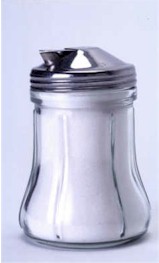 |
Sweet and Vicious—The
Case Against Sugar
The science writer
Gary Taubes was being his provocative self as he has been
in the past about the field of epidemiology and about
dietary components and chronic diseases. The occasion for
his latest report came as the cover story about sugar for
a health and wellness issue of the New York Times Sunday
magazine in April.
Taubes has been persuaded that
sugar is toxic by the evidence and arguments made
principally by Robert Lustig of the University of
California San Francisco School of Medicine. The mechanism
envisaged is for high levels of sugar consumption to cause
fat to accumulate in the liver, followed by insulin
resistance and metabolic syndrome which in turn can lead
to heart disease, diabetes, and obesity. According to
Taubes, sugar and high fructose corn syrup “…could be
toxic, but they take years to do their damage. It doesn’t
happen overnight. Until long term studies are done, we
won’t know for sure.” And some cancers such as breast
cancer may also be one consequence of insulin resistance
and metabolic syndrome.
Taubes confesses in the
article that sugar scares him. “I’d like to eat it in
moderation, I’d certainly like my two sons to be able to
eat it in moderation, to not overconsume it, but I don’t
actually know what that means, and I’ve been reporting on
this subject and studying it for more than a
decade…Officially I’m not supposed to worry because the
evidence isn’t conclusive, but I do.” |
|
|
|
Cell Phones and
Cancer—A Journalist’s Highly Regarded Review of the
Evidence
In a review article
of cell phones and brain cancer which an epidemiology
colleague has called a model of balanced investigation and
presentation, Columbia University’s Siddhartha Mukherjee,
has concluded that “…as of now, the evidence remains far
from convincing.” He bases this conclusion on the fact
that casting a wide-net to incriminate cell phones “has
yet to find solid proof of risk for cellphone radiation.
And while more definitive studies are needed, he raises
the possibility that even these studies might not give us
the degree of proof we want.
In the article, he seeks to
remind those who may be disappointed by the failure to
incriminate cell phones that we need standards by which
not only to rule in carcinogens, but also to rule them
out. Otherwise, he says, the effect is like crying wolf
too often. People get numb to your warnings. Thus, failing
to rule potential carcinogens in or out leads to a
degeneration of our scientific language about cancer.
|
 |
|
|
|
 |
This Time Harvard Study
Says Coffee May Reduce The Risk of Cancer
Senior
epidemiologists easily remember the study reported in the
NEJM on March 12, 1981 by investigators at Harvard about a
possible relationship between coffee and pancreatic
cancer. The report is infamous in the annals of
epidemiology because of the publicity it received and
because the association is often referred to by
epidemiologists as the example of a false positive
association. At the time, the lead investigator and well
known epidemiologist Brian MacMahon was quoted as saying
that he had stopped drinking coffee.
Now it is ironic that another
report should come from Harvard, this time pointing to the
potential benefits of coffee in protecting against the
most lethal or advanced forms of prostate cancer.
Investigators studied 47,911 men in the Health
Professionals Follow Up Study who reported their coffee
consumption patterns every four years between 1986 and
2008. Over this period, 5,035 cases of prostate cancer
were found, including 642 that were lethal. In the Harvard
study, consuming six or more cups daily produced an 18%
lower risk of any form of prostate cancer and a 60% lower
risk of developing lethal prostate cancer. The risk
reductions were found with either regular or decaffeinated
coffee.
The authors did not go out on
a limb to recommend coffee drinking as a cancer preventive
measure at this point, stating “it is premature to
recommend that men increase their coffee intake to reduce
advance prostate cancer risk based on this single study.
However, our findings are potentially important given the
lack of identified modifiable risk factors for advanced
prostate cancer.” |
|
|
|
CDC Tongue In Cheek
Blog Post Gets Wide Circulation
You just never know. CDC routinely posts
information on its public health preparedness blog and
gets a few thousand hits. Then it posts one about
preparing for a “zombie apocalypse” and the servers crash
because so many people want to read about the upcoming
disaster. In the process, hopefully they learn what it
takes to be prepared for a public disaster and CDC gets
its message, or at least part of it, across to a wide
range of Americans. Go figure. Perhaps epidemiologists and
other scientists with a message to convey that is not
getting through, say on climate change or autism and
vaccines could use this approach. Maybe a tongue in cheek
post about how Gravity Is Not A Law After All or How
Evolution Has Not Really Happened. To read the original
“Preparedness 101: Zombie Apocalypse” visit
http://blogs.cdc.gov/publichealthmatters/2011/05/preparedness-101-zombie-apocalypse/
|
 |
|
|
|
| |
|
|
|